


Have you noticed a drop in clicks from organic search over the past year, even though your rankings have held steady? You are not alone. The rise of generative AI search has changed how users interact with search results, and for many B2B brands, fewer people are clicking through to websites from queries that previously drove consistent traffic. Google Search Generative Experience, ChatGPT and Bing Copilot now answer questions directly on the search results page or inside chat interfaces, often without requiring users to visit any source. The immediate reaction is to assume SEO has become less important. That is the wrong conclusion. What has changed is not the value of SEO but what matters most within it.
The focus needs to shift from chasing click volume to building the kind of authority and clarity that makes your brand the answer AI systems choose to reference. Entity signals, E E A T principles and consistent mentions across trusted sources now determine which brands appear in AI generated answers. This includes quick wins that many teams overlook, such as directory citations, industry listings and mentions in forums or community discussions. These signals help AI systems verify that your organisation exists, what it does and why it matters. This article explains how to think about SEO when fewer users click through, what to prioritise, and how to build resilience in both traditional search results and AI driven surfaces.
Generative AI search refers to systems that answer questions directly by summarising content from multiple sources rather than simply listing links. Google Search Generative Experience, Bing Copilot and tools such as ChatGPT or Gemini can now compile an answer on the search results page or inside a chat interface, pulling from several websites and presenting a coherent response without requiring the user to visit any of them.
For B2B buyers, this changes behaviour in ways that matter. A procurement manager researching vendor management platforms might ask ChatGPT to compare three solutions, summarise pricing models or explain implementation timelines. They get an answer immediately, often with sources cited at the bottom. They might visit one or two sites to verify details or request a demo, but the initial research happens entirely inside the AI interface. This is what zero click behaviour looks like in a B2B context. Buyers scan an AI generated answer to shortlist vendors before ever visiting a website.
The key problem is that traditional metrics such as clicks and impressions no longer tell the full story about search visibility or influence. A page might be referenced heavily in AI answers yet show declining clicks in Google Search Console. That does not mean the page has lost value. It means the way value is measured needs to change. B2B buyers are adopting AI search tools faster than consumers because these tools save time in complex research processes, and that adoption is accelerating.
A reduction in clicks from search or AI answers does not automatically mean SEO is less effective. In many cases, the opposite is true. Visits arriving via AI summaries or AI enhanced search results are often more qualified and more engaged because the user has already consumed an overview and decided your brand is worth exploring further.
B2B SEO needs to shift from volume focus to value focus. Instead of counting every click equally, teams should track how often the brand is referenced in AI generated answers, how well AI referred visitors convert or engage, and whether those visitors move further down the funnel faster than traditional search traffic. I have worked with clients where AI referred visits showed higher average time on site, deeper scroll depth on key pages and more form interactions than visits from standard organic results. The volume was lower, but the quality was significantly higher.
This requires new success metrics. Share of answer or share of mention in AI outputs becomes a future KPI alongside traditional rankings. Time on site from AI referred visits, demo requests and pipeline contribution from those visits all matter more than raw click counts. The challenge is reframing reporting so stakeholders understand the shift. When you reframe SEO success in this way, you move from a volume story to a pipeline story because you care less about how many people searched and more about how many decision makers you influenced.
Generative engine optimisation, sometimes called answer engine optimisation, is the practice of shaping content so AI systems can understand, summarise and attribute it correctly. This is an evolution of good SEO practice rather than an entirely new discipline. Many of the techniques that helped content appear in featured snippets or knowledge panels also help AI systems extract and reference that content.
AI models look for clear, well signposted information that can be lifted and reused in an answer. Dense, unstructured pages make this harder.
You can help by:
These patterns already help with featured snippets and other enhanced results. In an AI context they also make it more likely that your content appears as a quoted source or that the model uses your framing when it explains a concept.
For example, a B2B service page that opens with a clear definition of who the service is for, what outcomes it supports and how it works gives both users and AI systems a strong, extractable summary.
Structured data helps search engines and AI systems understand what your content represents. It provides machine readable context for elements that matter in B2B such as organisations, products, FAQs and articles.
On key pages you should consider:
This does not guarantee inclusion in AI answers, but it reduces ambiguity around who you are and what you do. It also supports traditional SEO by making rich results more likely when they are available.
Schema should support the actual content on the page rather than attempt to manipulate AI outputs. Misrepresenting content through schema creates inconsistencies that AI systems may flag or ignore. The goal is clarity, not deception.
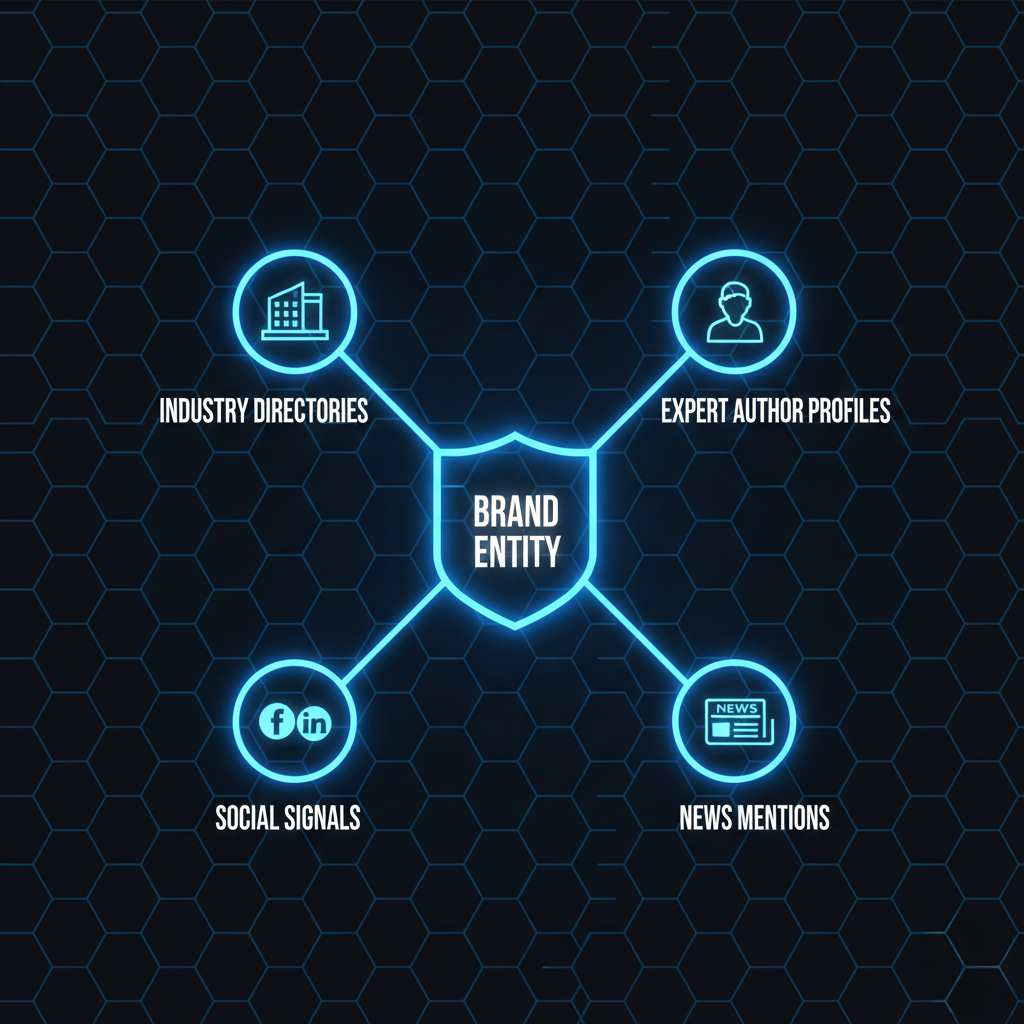
AI systems rely heavily on entities rather than just keywords. An entity is a recognisable thing such as a company, person or product with a stable identity across the web. Brands that are consistently described and referenced across the web have an advantage because AI models can verify information from multiple sources and attribute it confidently. Entity authority is not built overnight. It grows through consistent use of brand name and product names across all owned channels, high quality digital PR and thought leadership placements, and well written organisation and author profiles that demonstrate real world experience.
If your brand appears consistently, is mentioned on authoritative sites and has clear profiles for key people, it becomes easier for AI to treat you as a trusted reference when assembling answers.
You can strengthen entity authority by:
This connects directly to E E A T principles. Experience, expertise, authoritativeness and trustworthiness are not just ranking factors for Google. They are signals AI systems use to decide which sources to cite and prioritise. Entity authority grows over time with consistent, credible activity, and that investment pays off across both traditional search and generative AI surfaces.
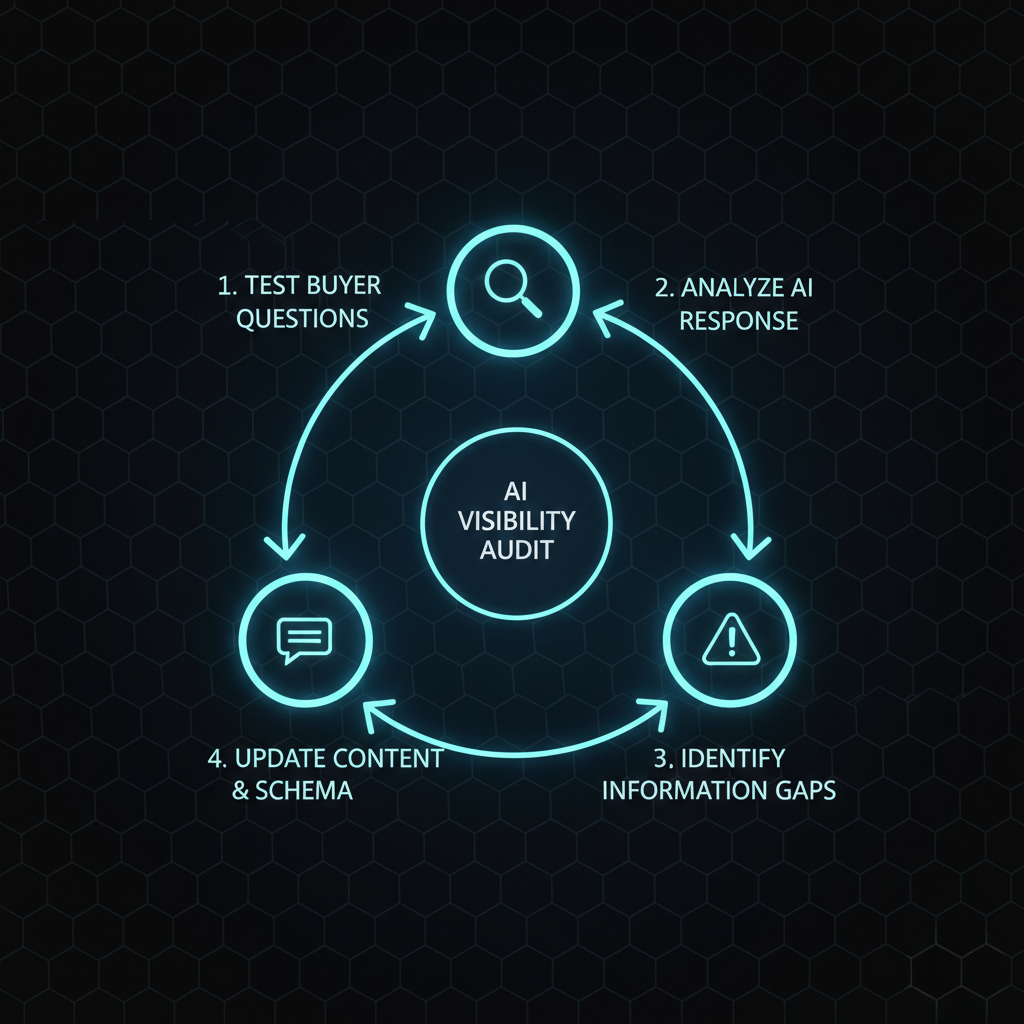
B2B content strategy needs to evolve to support both human readers and AI summarisation. The core principles of clarity, relevance and expertise remain the same, but the execution needs to account for how AI systems parse and present information. Marketers should regularly test their key value propositions and messages inside AI tools to see what is currently surfaced about their brand and competitors. This reveals gaps, inaccuracies and opportunities that would not be visible through traditional keyword research.
Your sales and customer success teams already know what prospects ask. These questions are ideal inputs for AI testing.
A practical exercise for marketing teams is:
If your brand does not appear, you have a visibility gap. If information about your solution is incomplete or inaccurate, you have a messaging gap.
Your content plan should then include pieces that answer these questions directly in your own words, supported by data, examples and proof. This could be in the form of blog articles, solution guides or a structured knowledge base.
AI may shorten or paraphrase content, so the core value proposition and differentiators need to be clear at the beginning of key pages and repeated in consistent language. Concise positioning statements and supporting proof should appear early in service pages, case studies and solution overviews. If the value proposition is buried halfway down the page or wrapped in vague language, AI systems may miss it entirely or misrepresent it.
On key pages such as your services page or sector specific solutions make sure to:
This approach helps human readers scan and decide quickly. It also means that if an AI model draws on your page, it is more likely to pick up the right positioning.
AI tools and social listening can surface emerging topics, pain points and long tail questions that traditional keyword tools may miss. These tools reveal what people are actually asking rather than what search volume data suggests they should be asking. This creates opportunities to build short, focused articles or knowledge base entries that answer these questions directly, with the aim of becoming a go to reference that AI assistants can safely cite.
The content does not need to be long or overly detailed. It needs to be clear, accurate and well structured. I have seen 400 word articles outperform 2000 word pages in AI citations simply because the shorter piece had a clearer structure and more direct answer to the question.
AI search will not be limited to English language or single market contexts. Global B2B brands need to consider how they appear in different regions and languages. Ensuring key content exists in local languages for priority markets is a foundational step. AI systems trained on multilingual data will reference local content when answering queries in those languages, and brands without localised content will lose visibility in those markets.
International SEO fundamentals still matter. AI systems often rely on the same underlying indexes and signals as traditional search. If your site has a clear international structure, with well implemented hreflang, localised content and separate sitemaps where appropriate, it is easier for search engines to understand which version serves which audience.
From a generative perspective you should:
B2B teams do not need to rebuild their entire SEO programme to respond to generative AI. They do need a clear, phased plan. An effective six months plan can include:
Measurement: Audit AI visibility by testing key buyer questions in ChatGPT, Gemini, Bing Copilot and Google Search Generative Experience. Track which brands appear in answers and how your content is referenced or ignored. Reframe KPIs to include share of mention, engagement quality from AI referred visits and pipeline contribution rather than focusing solely on click volume.
Content: Update content structure on key pages to include clear definitions, question based subheadings and FAQ sections. Make value propositions explicit at the top of service and solution pages. Plan a pilot generative engine optimisation project focused on your most important buyer questions and conversion paths.
Technical: Implement or refine schema markup on core pages, ensuring that Organisation, Product, FAQPage and Article schema align with actual content. Review entity signals such as brand mentions, author profiles and digital PR coverage to identify gaps in authority building. Update directory citations and industry listings to strengthen entity verification.
Organisations do not need to rebuild everything at once, but they do need a clear plan and a partner that understands both SEO and AI search behaviour. The businesses that adapt early will build advantages that compound over time, whilst those that wait will find themselves absent from the answers that matter most to their buyers.
Talk to Origin SEO about how SEO and generative AI are affecting your B2B search visibility and where you can gain an early advantage.


